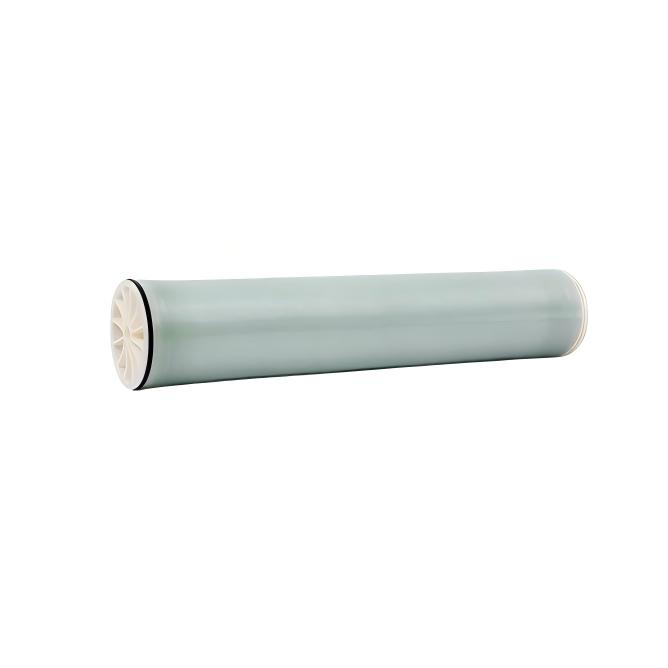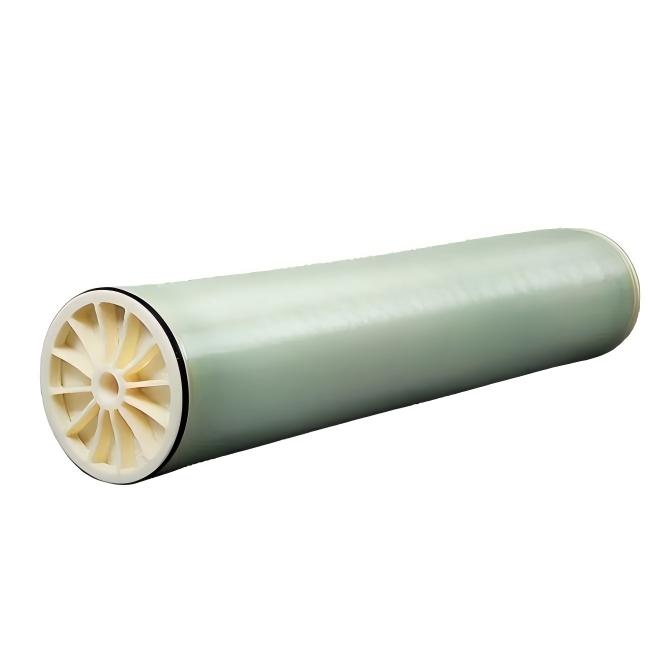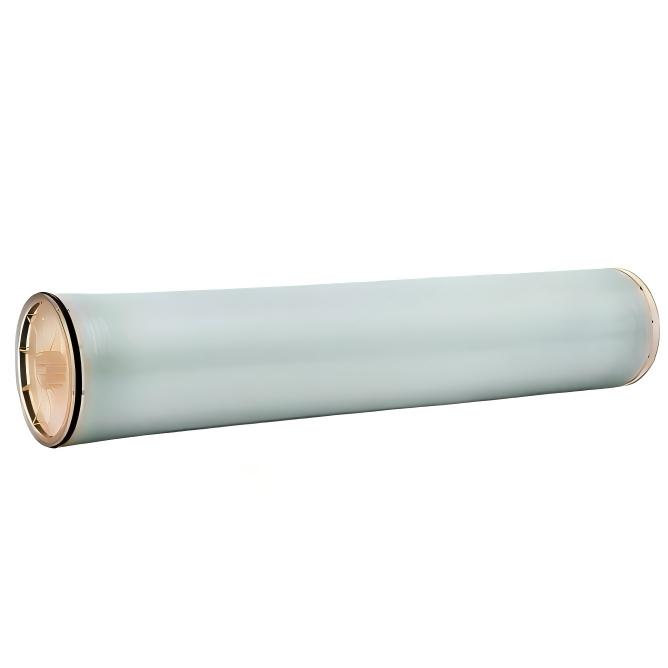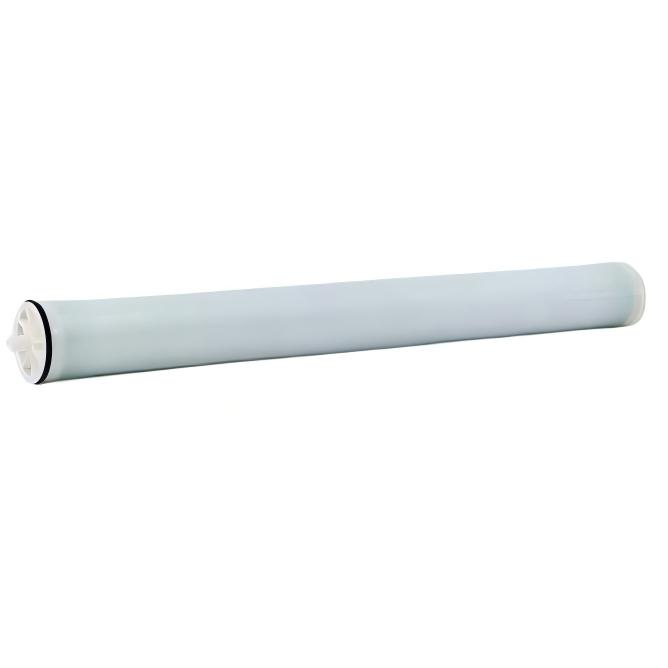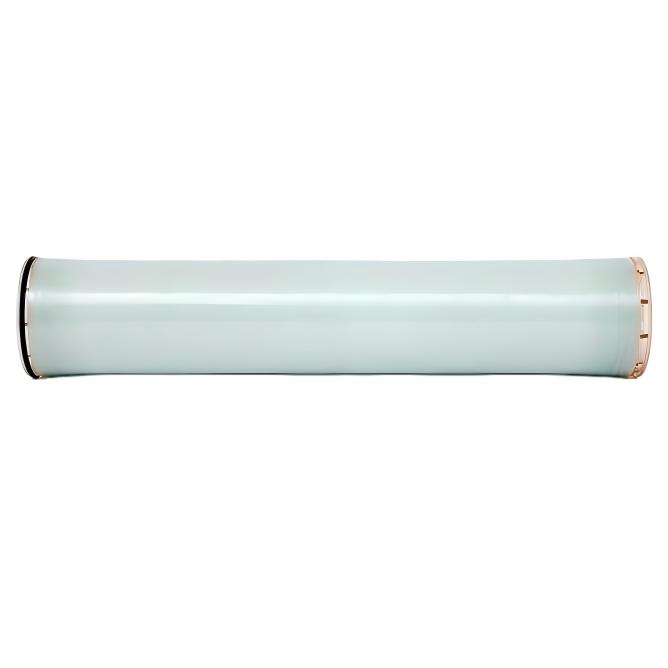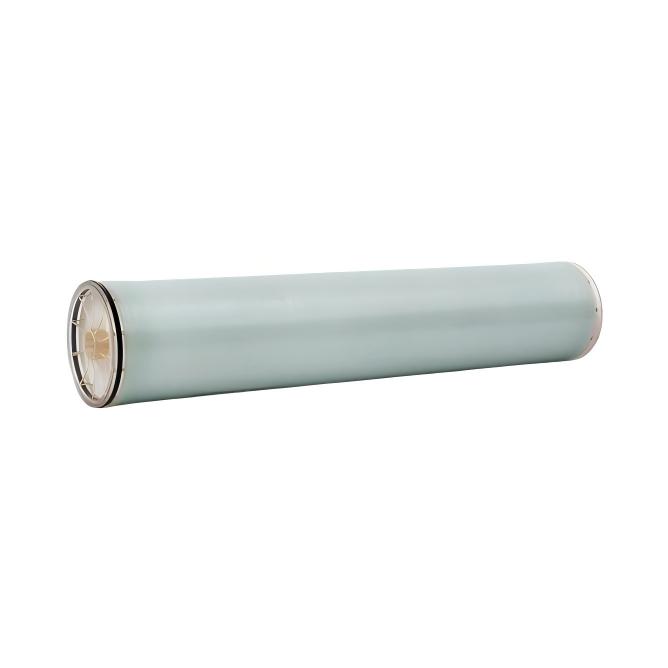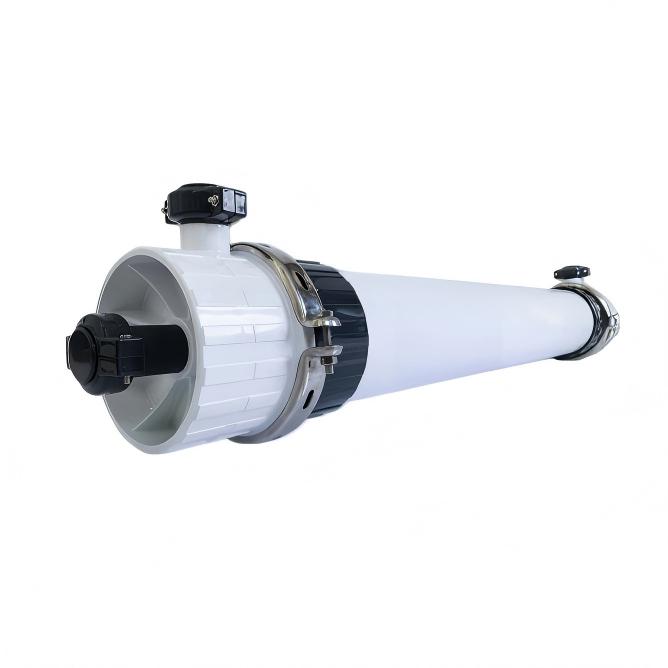
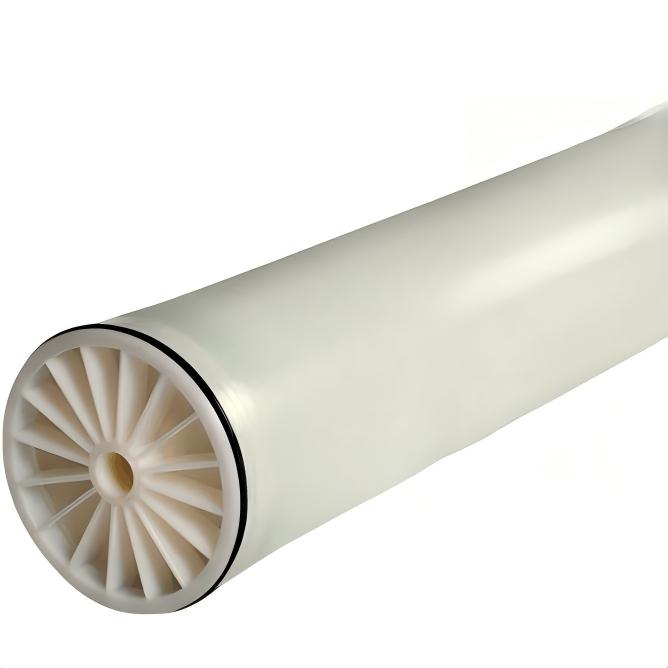
LP Series low pressure reverse osmosis membrane elements are designed for industrial and municipal water treatment systems requiring high permeate flow at reduced operating pressure, helping to lower energy consumption while maintaining stable salt rejection performance.
LP Series - Low Pressure RO Membrane Elements
The LP Series RO membrane elements are manufactured using advanced polyamide thin-film composite technology with optimized surface characteristics to enhance permeability and long-term operational stability.
By balancing membrane flux and salt rejection, the LP Series delivers consistent performance across a wide range of industrial water qualities while supporting extended membrane service life and reduced system operating costs.
Key Features
Typical Applications
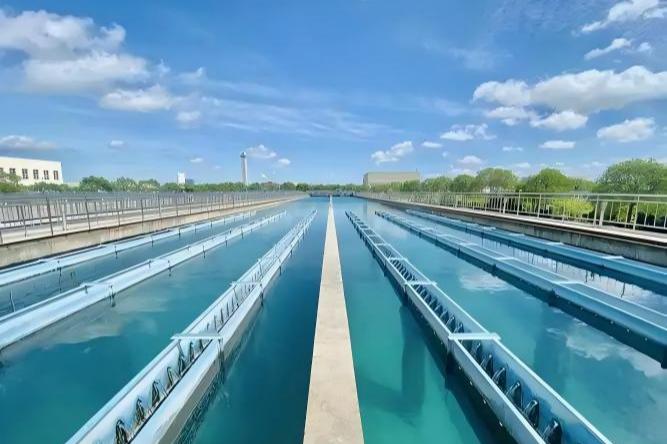
Water Sources
• Brackish water (TDS ≤ 10,000 ppm)
• Surface water
• Groundwater
• Municipal tap water
Industries & Systems
• Bottled water and packaged drinking water plants
• Industrial pure water and high-purity water systems
• Electronics and semiconductor water treatment
• Power plant boiler feed water preparation
• Wastewater reuse and recycling systems
• Process concentration and product purification applications
Membrane Element Working Principle (RO)
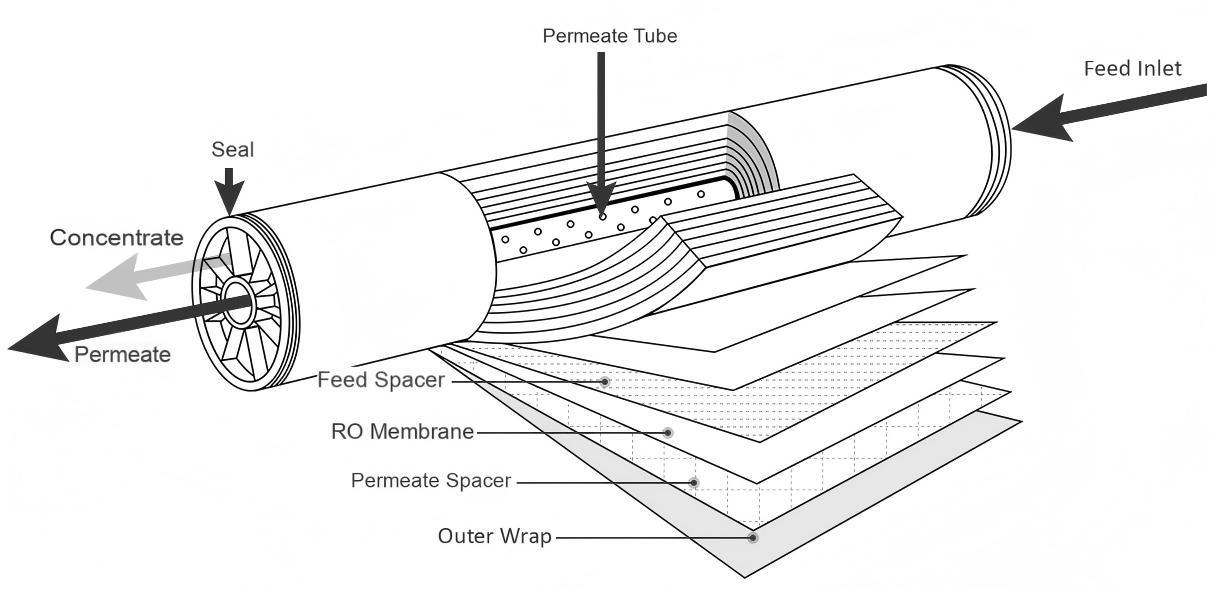
Step 1 – Feed Water Inlet
Feed water enters the LP membrane element under reduced operating pressure, lowering system energy demand.
Step 2 – Membrane Separation
The optimized membrane structure enables efficient water passage at lower pressure while maintaining stable salt rejection.
Step 3 – Permeate Collection
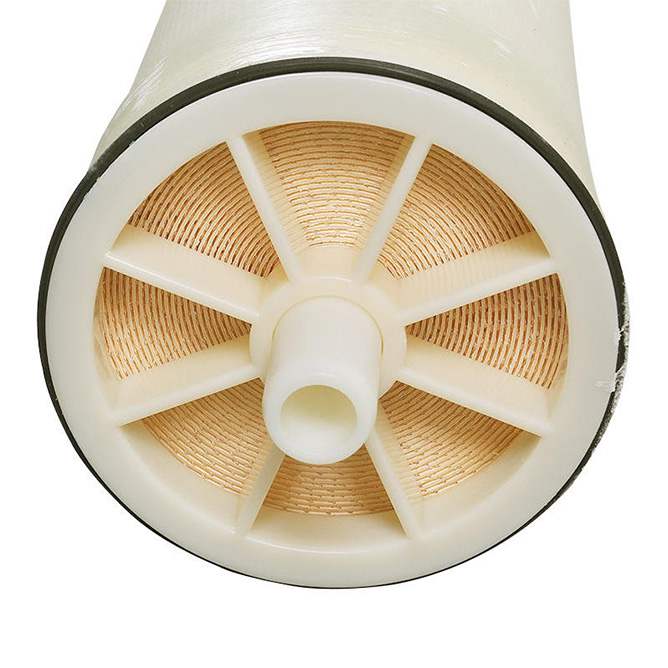
Permeate water is collected through the central tube with high productivity and reduced specific energy consumption.
Step 4 – Concentrate Discharge
Concentrated brine is discharged from the membrane element, maintaining hydraulic balance within the RO system.
Step 5 – Continuous Operation
The LP membrane supports long-term operation with lower operating pressure, reduced pump load, and improved energy efficiency.
Technical Specifications
Product Dimensions
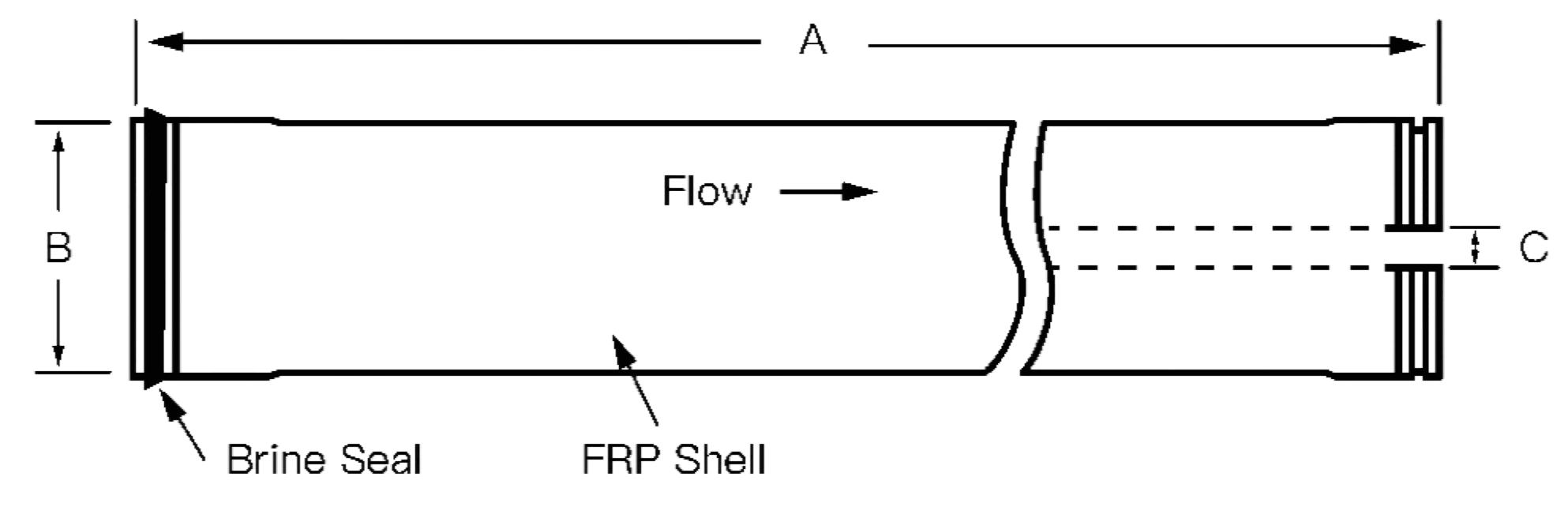
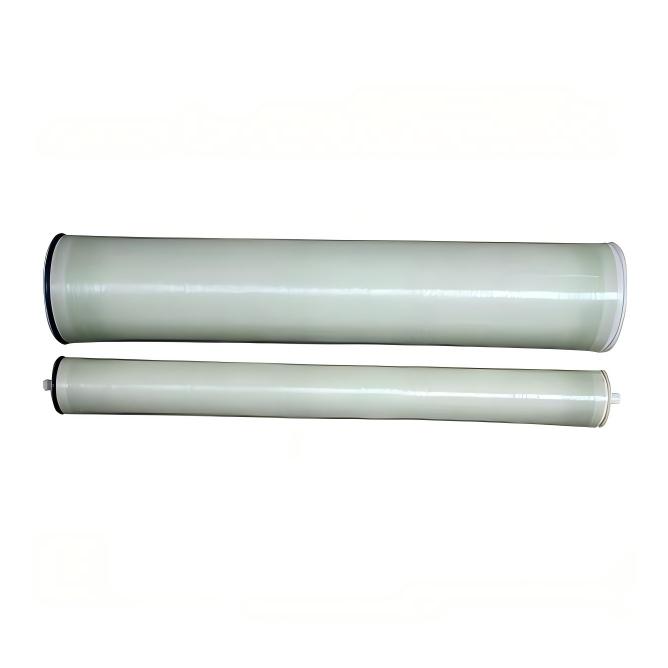
| Dimensions | in. (mm) |
| A | 40 (1016) |
| B | 7.9 (201) |
| C | 1.05 (26.7) |
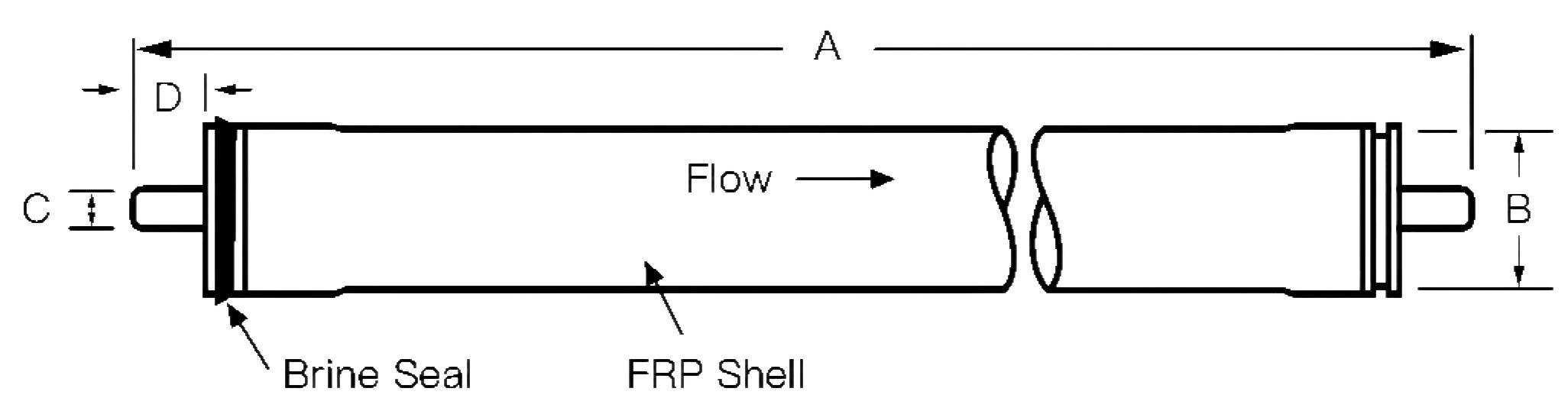
| Dimensions | in. (mm) |
| A | 40 (1016) |
| B | 3.9 (99.7) |
| C | 0.75 (19.1) |
| D | 1.05 (26.7) |
Product Parameters
The following performance data is based on standard testing conditions. Actual performance may vary depending on feed water quality and operating parameters.
| Model |
Permeate Flow |
Stable Rejection | Effective Membrane Area |
Feed Spacer Thickness | ||
| GPD | m3/d | % | ft2 | m2 | mil | |
| LP22-8040-440 | 11500 | 43.5 | 99.7 | 440 | 40.9 | 28 |
| LP22-8040 | 10500 | 39.7 | 99.7 | 400 | 37.2 | 28 |
| LP22-8040PRO | 11000 | 41.6 | 99.7 | 400 | 37.2 | 28 |
| LP22-8040/31 | 10500 | 39.7 | 99.7 | 400 | 37.2 | 31 |
| LP21-4040 | 2800 | 10.6 | 99.6 | 100 | 9.3 | 28 |
| Testing Conditions | Operating pressure 225 psi (1.55 MPa) |
|
| Tested at 2000 mg/L NaCl solution |
||
| Temperature at 25℃ |
||
| pH 7.0 ± 0.5 |
||
| Recovery rate at 15% |
||
|
Minimum salt rejection LP22-8040 & LP22-8040/31 & LP21-4040 99.4% LP22-8040PRO 99.6% LP22-8040-440 99.5% |
||
| Operating Conditions & Limits |
Maximum operating pressure | 600 psi (4.14 MPa) |
| Maximum feedwater flow |
8040-75 gpm (17 m³/h) 4040-16 gpm (3.6 m³/h) |
|
| Maximum temperature | 45℃ | |
| Maximum feedwater flow SDI15 | 5 | |
| Maximum concentration of free chlorine | <0.1 mg/L | |
| Maximum pressure drop per element | 15 psi (0.1MPa) | |
| Allowed pH range for chemical cleaning | 1-13 | |
| Allowed pH range for feedwater in operation | 2-11 | |





Leave a Message
Scan to wechat :

Scan to Whatsapp :

 Product categories