
Industrial wastewater rarely flows at a constant rate or contains the same pollutant concentrations throughout the day. Production shifts, equipment cleaning, batch processes, and periodic discharge can all create fluctuations that affect downstream treatment.
For this reason, wastewater equalization is an important consideration in industrial treatment plant design. A properly designed equalization tank helps balance variations in flow and, where appropriate, wastewater quality before the water enters subsequent treatment stages.
However, equalization is not simply a matter of adding a larger tank. Its effectiveness depends on wastewater characteristics, discharge patterns, and the requirements of the overall treatment process.
What Does a Wastewater Equalization Tank Actually Do?
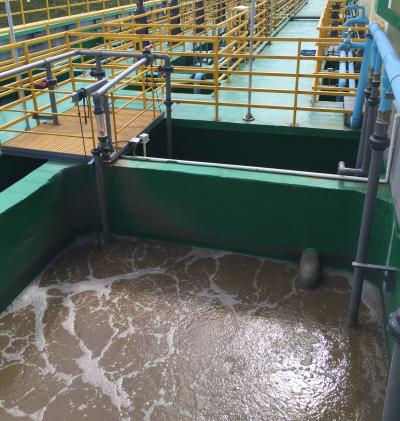
An industrial wastewater equalization tank provides temporary storage to reduce the impact of fluctuations in wastewater flow. With appropriate mixing and controlled pumping, it can also help moderate variations in pollutant concentrations.
Without sufficient equalization, a sudden increase in flow may overload downstream units. A sharp change in pH, organic loading, or suspended solids can also affect chemical dosing, biological treatment, and filtration performance.
The benefits depend on the application, but a well-planned equalization system can help:
Equalization does not remove pollutants by itself. It creates more manageable conditions for the treatment processes that follow.
How Much Equalization Capacity Does a Plant Need?
One common design mistake is sizing an equalization tank using average daily wastewater flow alone.
For example, two factories may each generate 500 m³ of wastewater per day, but their discharge patterns may be very different. One may release wastewater continuously, while the other discharges most of its wastewater during a few production or cleaning periods.
The second facility may require substantially more effective equalization capacity, depending on the timing and duration of peak discharges.
Engineers should therefore review hourly flow patterns, production schedules, batch discharge volumes, and the operating hours of downstream treatment units. Where reliable flow data is unavailable, wastewater monitoring across representative production conditions can improve the design basis.
The usable tank volume also matters. Allowances may be needed for minimum operating levels, pump control, mixing, and unexpected inflow. The final capacity should follow a flow-balance assessment rather than a generic tank-sizing rule.
Equalization Is Not a Substitute for Wastewater Segregation
Not every wastewater stream should be mixed together simply because an equalization tank is available.
Highly acidic or alkaline streams, concentrated chemical waste, high-salinity wastewater, and streams containing specific metals may require separate collection or pretreatment. Mixing incompatible streams can create precipitation, scaling, additional chemical consumption, or more difficult downstream treatment.
Equalization should therefore be considered alongside source segregation and pretreatment. Depending on the wastewater, these measures may be more effective than increasing tank volume alone.
What Should Be Considered Beyond Tank Volume?
Equalization performance depends on more than capacity. Mixing must be suitable for the wastewater, particularly where solids may settle or contaminants may separate. Pumping and level controls should respond to changes in inflow without creating unnecessary downstream flow fluctuations.
Designers should also consider odor control, corrosion, maintenance access, and the consequences of equipment failure. For wastewater containing suspended solids or oil, the need for additional pretreatment should be assessed rather than assuming that mixing alone will maintain consistent feed quality.
Engineering Perspective
Wastewater equalization is a process-design decision, not simply a tank-sizing exercise. Its purpose is to help downstream treatment operate within manageable hydraulic and water-quality conditions.
A reliable design starts with representative flow and wastewater data, identifies which streams can be combined, and determines how much buffering the actual operating pattern requires. When these factors are considered early, equalization can support more stable treatment and help avoid unnecessary oversizing elsewhere in the plant.





Leave a Message
Scan to wechat :

Scan to Whatsapp :

 Product categories