
How to Identify the Causes of RO Membrane Fouling in Industrial Water Systems
Reverse osmosis (RO) membrane fouling is a common cause of declining performance in industrial water treatment systems. It can lead to higher operating pressure, reduced permeate flow, increased cleaning frequency, and shorter membrane service life.
However, these symptoms do not always indicate that the membrane elements themselves are defective. In many cases, the underlying problem lies in pretreatment, feedwater changes, scaling, or operating conditions.
For engineers and plant operators, the first step is to identify what has changed before deciding whether chemical cleaning, process adjustment, or membrane replacement is necessary.
Start With Operating Data, Not Chemical Cleaning
When an RO system begins to lose performance, review its operating records before taking corrective action.
Three indicators are particularly useful:
These indicators should be assessed together. Temperature, feed pressure, recovery rate, and feedwater salinity can all affect RO performance. Comparing raw readings without accounting for these variables may lead to an incorrect diagnosis.
Four Common Causes of RO Membrane Fouling
1. Particulate and Colloidal Fouling
Fine suspended solids and colloidal particles can accumulate on the membrane surface or within feed channels. Typical sources include inadequate filtration, unstable coagulation, and fluctuations in upstream wastewater quality.
A rising differential pressure, especially in the lead elements or first stage, can be a useful warning sign.
Check the pretreatment filters, cartridge filter condition, feedwater turbidity, and any recent changes in upstream chemical dosing. Replacing cartridge filters may help, but it will not solve the problem if the upstream process continues to release excessive solids.
2. Scaling From Dissolved Salts
Scaling occurs when dissolved minerals become concentrated enough to precipitate on membrane surfaces. Calcium carbonate, calcium sulfate, and silica deposits are among the potential concerns, depending on feedwater chemistry.
Scaling risk increases with recovery rate, but recovery alone does not determine whether scaling will occur. Feedwater composition, pH, temperature, concentration polarization, and antiscalant performance also matter.
Review water analysis, concentrate chemistry, recovery settings, and antiscalant dosing before making adjustments. Simply increasing chemical dosage without confirming the cause may add cost without resolving the underlying issue.
3. Organic Fouling
Natural organic matter, residual oils, and other organic compounds can accumulate on membranes. This is particularly relevant when RO treats industrial wastewater or reclaimed water with variable organic content.
Review feedwater TOC or other relevant organic indicators, oil and grease levels, pretreatment performance, and changes in production or cleaning operations.
Where industrial wastewater is involved, the treatment process may need improved oil removal, coagulation, clarification, or other targeted pretreatment rather than more frequent RO cleaning alone.
4. Biofouling
Microorganisms can grow and form biofilms on membrane surfaces, increasing flow resistance and reducing system performance. Potential warning signs include a progressive rise in differential pressure, unstable operation, and recurring fouling after cleaning.
Check the feedwater source, pretreatment performance, system stagnation periods, and sanitation procedures. Any disinfection strategy must be compatible with the membrane material; for example, many polyamide RO membranes are sensitive to free chlorine.
What Does the Pattern of Performance Loss Tell You?
The location and combination of symptoms can help narrow down the likely cause.
| Observed symptom | Possible causes to investigate |
| Differential pressure rises, especially in the first stage | Particulate fouling, colloids, or biofouling |
| Permeate flow declines while differential pressure changes little | Scaling, organic fouling, temperature changes, or membrane compaction |
| Permeate conductivity increases noticeably | Membrane damage, seal or O-ring leakage, or changes in feedwater conditions |
| Fouling returns soon after cleaning | Incomplete cleaning, persistent pretreatment problems, scaling recurrence, or biofilm regrowth |
These are diagnostic clues, not definitive conclusions. Several mechanisms can occur simultaneously, and normalized operating data should be reviewed before selecting a cleaning procedure.
A Practical Troubleshooting Sequence
A structured investigation is usually more useful than immediately increasing cleaning frequency.
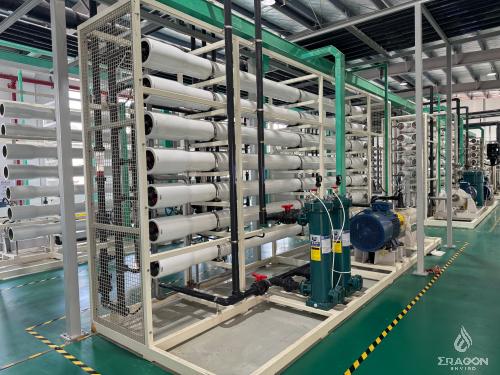
In industrial applications, this investigation should also consider whether the feedwater itself has changed because of production adjustments, wastewater stream mixing, or upstream equipment problems.
Engineering Perspective: Fouling May Begin Before the RO Unit
In an industrial wastewater reuse project, rapid RO pressure increases and unstable operation were traced to inconsistent pretreatment, which allowed fine particles and residual organics to reach the membrane system. The engineering response focused on improving upstream treatment and process control rather than assuming membrane replacement was the answer.
The lesson is straightforward: RO membrane performance depends on the quality and consistency of the water entering the system.
For industrial applications, proper system design and pretreatment are essential to maintaining stable RO performance. Explore ERAGON's industrial reverse osmosis systems for water treatment and reuse applications.
For broader background on membrane-based reuse, see How Membrane Technology Is Transforming Industrial Water Reuse.
Conclusion
Identifying the cause of RO membrane fouling requires more than observing a drop in permeate flow or an increase in pressure. Operating trends, feedwater analysis, pretreatment performance, and deposit characteristics should be considered together.
The most effective long-term response is to correct the mechanism causing fouling—not simply to clean the membrane more often.





Leave a Message
Scan to wechat :

Scan to Whatsapp :

 Product categories