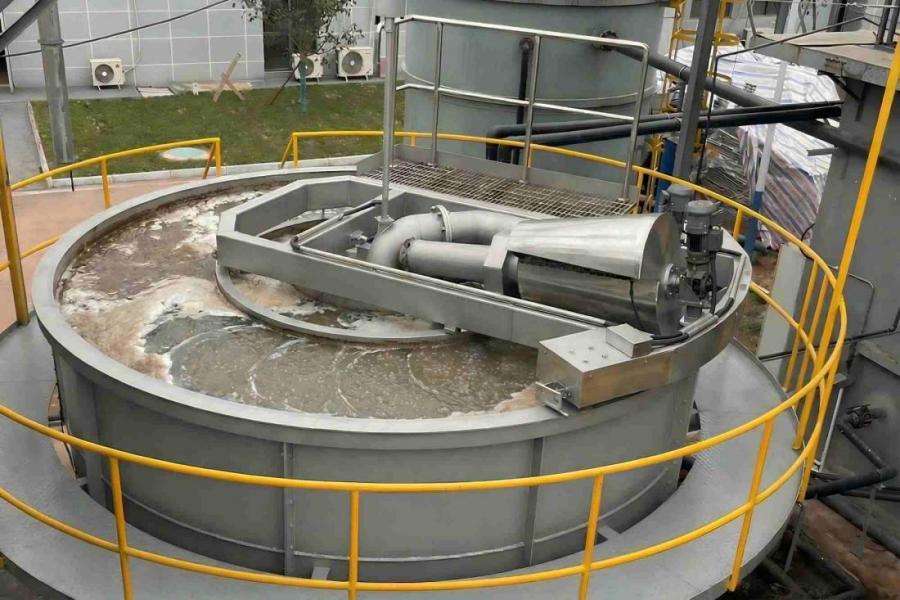
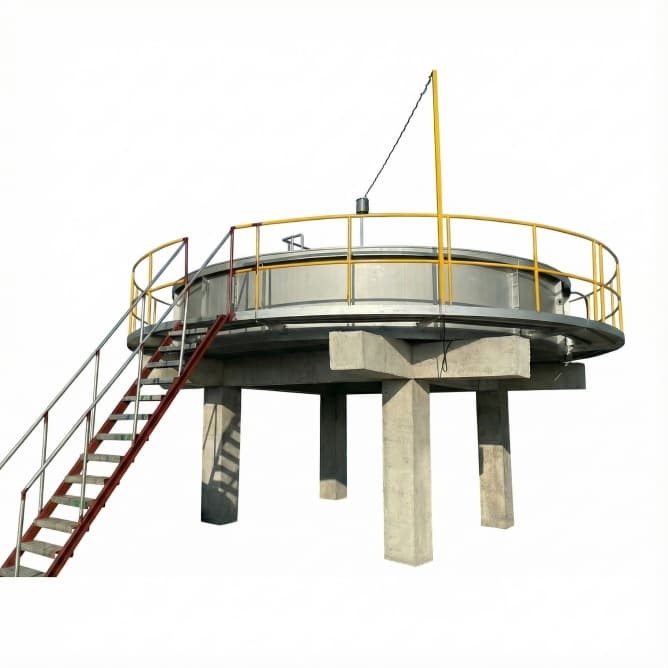
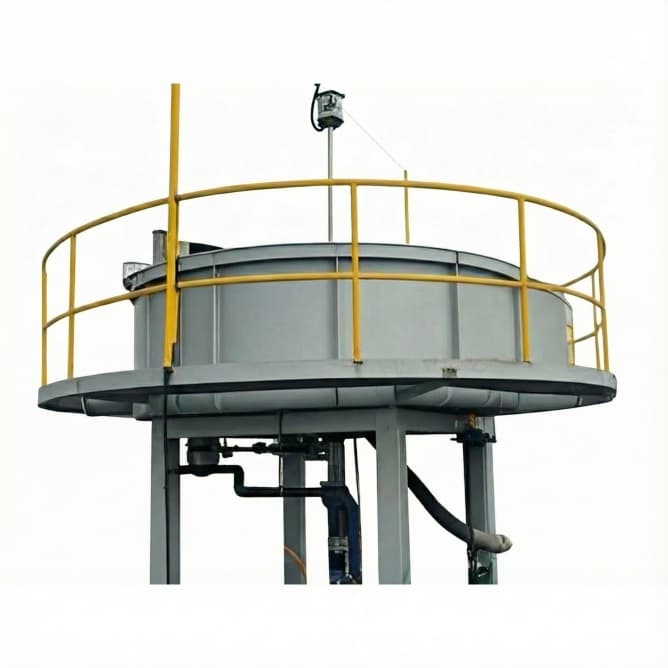
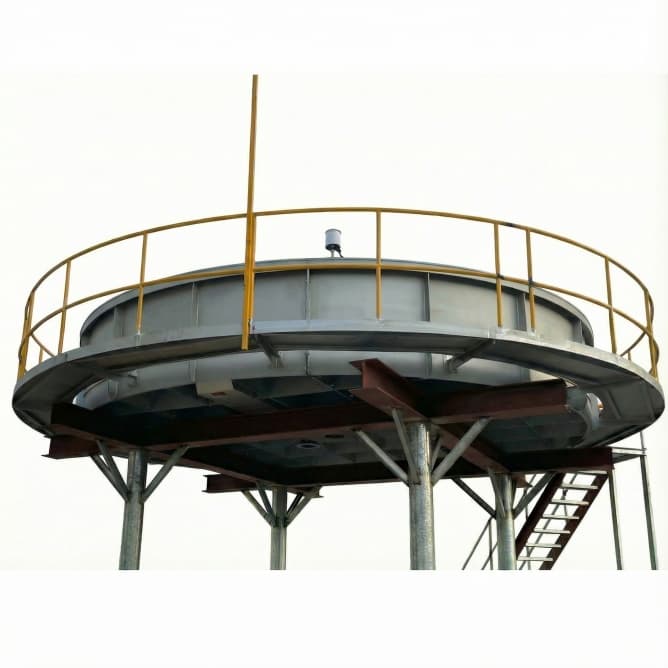
High Efficiency Shallow Dissolved Air Flotation System is a high-efficiency shallow dissolved air flotation unit designed for rapid separation of suspended solids, oils, and greases from wastewater.
Its shallow tank configuration and optimized air dispersion deliver stable clarification performance with a reduced footprint.
High-Efficiency Shallow Dissolved Air Flotation (DAF) System
High Efficiency Shallow DAF system utilizes dissolved air flotation technology combined with a shallow tank design to enhance flotation efficiency.
By generating fine air bubbles that attach to suspended solids and oils, the system enables rapid flotation and effective separation under varying operating conditions.
Key Features
System Placement
• Installed after primary screening or equalization as a solid-liquid separation stage
• Can be positioned before filtration or membrane systems to reduce load
• Often integrated upstream of biological treatment to improve efficiency
Typical Applications
• Industrial wastewater pretreatment (food, dairy, textile, plating, etc.)
• Oil/water separation in refinery and petrochemical effluents
• High-load suspended solids removal for municipal plants
• Stormwater and runoff clarification
• Pre-treatment for membrane systems (UF/RO) and tertiary polishing
HSDAF System Process Overview
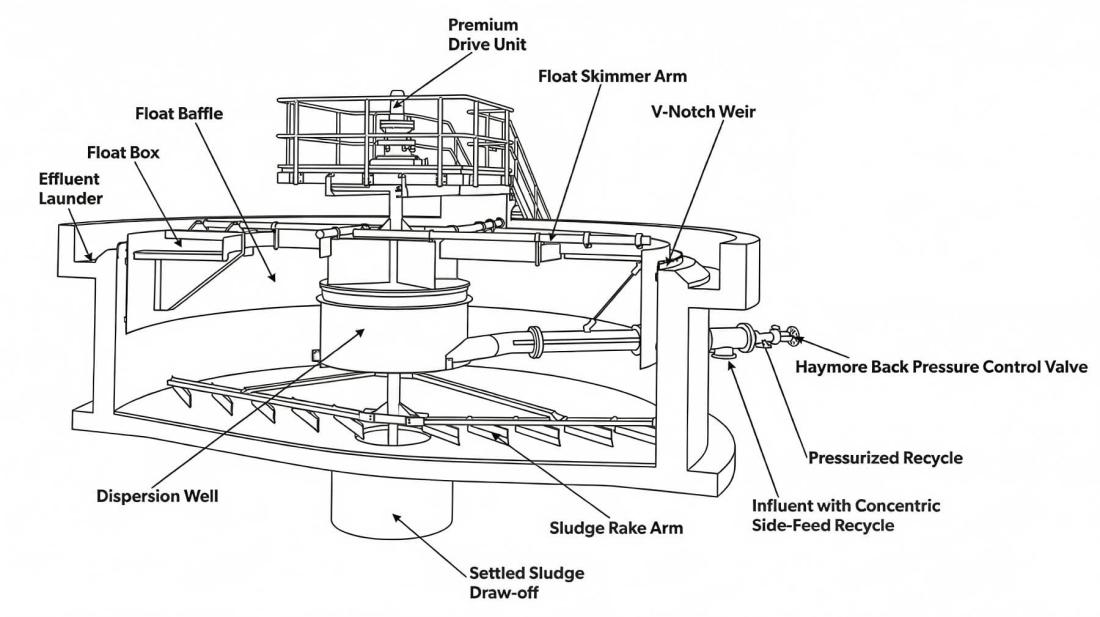
Step 1 – Influent Distribution
Wastewater enters the flotation tank and is evenly distributed across the inlet zone.
Step 2 – Air Dissolution & Release
Pressurized water saturated with air is released, forming fine microbubbles.
Step 3 – Flotation Separation
Microbubbles attach to suspended solids and oils, lifting them to the surface.
Step 4 – Sludge Removal
Floated sludge is continuously skimmed and discharged for further handling.
Step 5 – Clarified Effluent Discharge
Clarified water exits the system for downstream treatment or discharge.
Technical Specifications
| Model |
Capacity m³/h |
Tank Dimensions (D×H) in. / mm |
Operating Load T |
Motor Power kW |
Booster Pump kW |
Air Compressor kW |
| EET-S2 | 15 | 79×26 / 2000×650 | 6.5 | 0.5 | 1.5 | 1.5 |
| EET-S2.4 | 20 | 94×26 / 2400×650 | 9.5 | 0.5 | 2.2 | 1.5 |
| EET-S3 | 35 | 118×30 / 3000×750 | 13.5 | 0.5 | 4 | 1.5 |
| EET-S3.5 | 50 | 138×31 / 3500×800 | 18 | 0.5 | 5.5 | 1.5 |
| EET-S4 | 66 | 157×31 / 4000×800 | 21.5 | 0.5 | 5.5 | 2.2 |
| EET-S4.5 | 120 | 177×31 / 4500×800 | 26.5 | 0.5 | 5.5 | 2.2 |
| EET-S5 | 100 | 197×31 / 5000×800 | 32.5 | 0.5 | 7.5 | 2.2 |
| EET-S6 | 150 | 236×31 / 6000×800 | 43 | 0.5 | 11 | 4 |
| EET-S7 | 180 | 276×33 / 7000×850 | 60 | 1.1 | 15 | 4 |
| EET-S8 | 250 | 315×33 / 8000×850 | 76 | 1.1 | 18.5 | 5.5 |
| EET-S9 | 300 | 354×33 / 9000×850 | 93 | 1.1 | 22 | 5.5 |
| EET-S10 | 400 | 394×33 / 10000×850 | 114 | 1.5 | 30 | 5.5 |
| EET-S11 | 500 | 433×36 / 11000×925 | 149 | 1.5 | 30 | 5.5 |
| EET-S12 | 750 | 472×36 / 12000×925 | 179 | 1.5 | 30 | 5.5 |
| EET-S13 | 900 | 512×36 / 13000×925 | 210 | 2.2 | 37 | 5.5 |
| EET-S14 | 1000 | 551×41 / 14000×1050 | 258 | 2.2 | 37 | 5.5 |
| EET-S15 | 1200 | 591×41 / 15000×1050 | 328 | 2.2 | 45 | 5.5 |
| EET-S16 | 1600 | 630×41 / 16000×1050 | 340 | 2.2 | 55 | 5.5 |
| Process & Performance | Hydraulic Retention Time (HRT): 3–5 min |
| Surface Loading: 8–15 m³/m²·h | |
| Treatment Capacity / Loading: Up to ~10 m³/m²·h | |
| Suspended Solids (SS) Removal: Up to ~98%+ | |
| Color Removal: Up to ~95% | |
| COD Removal: Up to ~90% | |
| Chemical Consumption: PAC reduced up to ~150 ppm | |
| Polymer Reduction: PAM reduced ~2 ppm |
| Design & Configuration Specifications | Air System: Pressurized air saturation and recycle unit |
| Microbubble Injection: Integrated microbubble generation system | |
| Scum Removal: Surface skimmer and scraper assembly | |
| Structural Components: Structural support and access platform | |
| Supply Scope: Standard HSDAF unit with accessories and documentation |
Note: Specifications listed above represent general design characteristics of the High-efficiency shallow dissolved air flotation system. Final configuration is determined based on influent water quality and project requirements.





Leave a Message
Scan to wechat :

Scan to Whatsapp :

 Product categories